
Sunisa Chaiklieng
Department of Occupational Safety and Environmental Health, Faculty of Public Health, Khon Kaen University
Chavanakorn Khrueakaew
Master of Science Program Student in Occupational Health and Safety, Faculty of Public Health, Khon Kaen University
Abstract
The awkward postures and repetitive movements of farmers during regular operations and activities could pose a significant risk of developing musculoskeletal disorders (MSDs). The purpose of this study was to assess ergonomic risk using the newly developed Farmers’ Ergonomic Risk Assessment (FERA) tool and compare it with the Rapid Entire Body Assessment (REBA). During the development phase of using FERA to assess ergonomic risk, 120 rubber plantation farmers from the Udon Thani, Roi Et, and Ubon Ratchathani provinces in northeastern Thailand were selected through cluster sampling. Data were collected using the MSDs Severity and Frequency Questionnaire (MSFQ), the REBA, and the FERA. Farmers who had musculoskeletal discomfort stated that the highest severity was found in the shoulders, upper back, and hands/wrists (73.30%), followed by the lower arm (71.60%) and the neck (70.00%). The results showed that ergonomics risk assessed by FERA was found at the very high-risk level, with an operational posture that should be improved immediately (43.30%), while REBA also showed a very high-risk level (43.30%); this was followed by the high-risk level found by FERA (33.30%) as well as the high-risk level found by REBA (35.00%). FERA was statistically related to the REBA tool with linearity (Rho = 0.863, p-value < 0.001); the intra-rater reliability of the assessor, measured as an ICC value, was 0.995, while that of the farmer was 0.977, and between the assessor and the farmers’ self-assessment, the inter-rater reliability was 0.971. The FERA would therefore be a very useful tool for ergonomic risk assessment among farmers performing self-assessments.
KEY WORDS: ergonomics, risk assessment, musculoskeletal disorders, FERA, agriculture
1. Introduction
At present, the occupational group of farmers consists of informal workers who have no social security from work and are at risk for most health conditions involving musculoskeletal disorders (MSDs). The nature of rubber farmers’ work, which involves repetitive gestures and movements over extended periods while performing a wide range of operations, may have long-term health implications.
In the previous study on musculoskeletal disorders in the rubber farmer group of the Ubon Ratchathani province, we found that in the previous month, farmers had experienced a very high level of discomfort, which was determined by the frequency and severity of MSDs. The top three symptoms were discomfort in the lower back (22.52%), hands and wrists (13.92%), and knees (16.14%) (Chaiklieng, 2021). Ergonomics risk assessment with the Rapid Entire Body Assessment (REBA) tool is suitable for job types with a whole-body working posture, as it considers the position and movement characteristics of body parts and can be used for rapid and systematic assessment (Hignett and McAtamney, 2000). A REBA tool was used to assess the following ergonomic risks: lifting, carrying, moving objects with repetitive behavior, and postures involving tiptoes, leaning, and repetitive short twitching of the wrist over long periods of time. It was found that farmers were at high risk in the rubber tapping process, which was a high-risk job that should be improved immediately (Khanaphan et al., 2019). Moreover, moving rubber to sell by car, relaxing fewer than three hours per day, and lower hand compression performance had statistically significant correlations with a high risk of MSDs (Chaiklieng et al., 2020). The previous research on REBA-based ergonomics risk assessment in rubber farmers in the Ubon Ratchathani province showed that they were at very high risk, which requires corrective action in the rubber tapping process (Chaiklieng et al., 2020). A study of the results of the ergonomics risk assessment by REBA found that these farmers had the highest risk of all (level 4) (Khanaphan et al., 2019), which was a very high risk, indicating that the problems of rubber farmers should be improved. Another study confirmed the REBA analysis result (11 points), meaning that rubber farming was high-risk work (Mattharak et al., 2011). In general, the MSDs risk was assessed using unidirectional tools such as questionnaires of MSDs on different body areas, physical fitness tests (Homsombat and Chaiklieng, 2017), or observing posture using the REBA technique. To date, no reliable technique for assessing the risk to farmers in operations has been established. Therefore, extensive research was done to develop the variables and risk levels included in the Farmers’ Ergonomic Risk Assessment (FERA) tool. The objective of this study was to assess the ergonomic risks with the developed FERA tool and compare its results to those of the REBA. It could be useful in the protection against and health surveillance of MSDs, which may continuously arise from the farmers’ work.
This was a cross-sectional descriptive research study, and the population used in this study were farmers in the northeastern region who were registered as rubber planters. The inclusion criteria were as follows: 1) being a farmer registered in the district; 2) being a person with Thai nationality aged 20 years and over; 3) being able to read and write Thai; 4) voluntarily participating in the research project. The exclusion criteria were as follows: 1) being a farmer who had been involved in a severe accident or had undergone surgery that
caused skeletal and muscular disorders; 2) being a pregnant farmer.
The study of the sample group was divided into two phases: the creating of an assessment tool phase, involving 60 people from the Udon Thani and Roi Et provinces, and a development phase, which was used as a tool to assess the ergonomics risk related to the farmers’ working posture, involving 60 rubber plantation farmers from the Ubon Ratchathani province. The subjects were randomly sampled using a cluster sampling method in the northeastern region, which is the region with the most registrations as rubber planters. The sample size calculation in the case of an unknown population (Jirawatkul, 2008) was used to estimate the number of farmers to be used in the study. The proportion at high ergonomic risk, based on a previous study of rubber farmers
in the Ubon Ratchathani province (Khanaphan et al., 2019), which consisted of those working in the rubber tapping process, was 0.87. This study required a sample size of at least 58 people. Ultimately, this study employed a sample group of 120 farmers from Udon Thani and Roi Et (n=60) and from the Ubon Ratchathani (n=60) provinces.
2.2 Studied Tools
The general information questionnaire consisted of questions on gender, age (years), congenital disease, agricultural work experience, and lifting and moving activities. In this study, the work activity that had the greatest effect on pain and fatigue was the rubber tapping activity.
Body discomfort was evaluated according to the results of the Musculoskeletal Disorders Severity and Frequency Questionnaire (MSFQ). According to a study on rubber farmers conducted by Chaiklieng (2019), 10 body areas were affected: the neck, shoulders, lower arms, hands and wrists, upper back, lower back, hips and thighs, knees, calves, and feet and ankles.
The discomfort was graded on 5 levels: level 1 was asymptomatic or comfortable (score 0), level 2 was mild discomfort (score 1-2), level 3 was moderate discomfort (score 3-5), level 4 was severe discomfort (score 6-8), and level 5 was very uncomfortable (score 9-16).
The FERA was developed in this study for use as a common tool for observation of a farmer’s working posture. The body assessment part is divided into two parts. Part 1 is mainly based on the upper part of the body, namely the shoulders, arms, and back, and Part 2 assesses the lower part of the body. The final scores from assessment of the risk level are divided into the following 5 levels: Acceptable (1 point) means that the performance posture does not need to be improved; Low (2-3 points) means that the performance posture should be improved; Moderate (4-7 points) means that the performance posture should be further improved; High (8-14 points) means that the performance posture should be improved; Very High (≥15 points) means that the performance
posture should be improved immediately.
The ergonomics risk assessment form was used to observe working postures by using the REBA technique (Hignett and McAtamney, 2000), and using the rubber farmers’ edition from Chaiklieng
(2021). The 5 levels were as follows: Level 1 means acceptable, Level 2 means low-risk work requiring minimal monitoring and adjustments, Level 3 indicates moderate-risk work requiring monitoring and adjustment of posture in additional work, Level 4 indicates high-risk work requiring monitoring and adjustment of work posture, and Level 5 indicates very high-risk work requiring immediate monitoring and adjustment of work posture.
3. Farmers' Ergonomic Risk Assessment (FERA) Creation and Development
3.1 Instrument Structure
The FERA tool was used to observe each farmer’s working posture. It is classified into steps according to the upper and lower parts of the body. It consists of an assessment of posture and the duration of work. The farmers were assessed with this tool, as shown in Fig. 1.
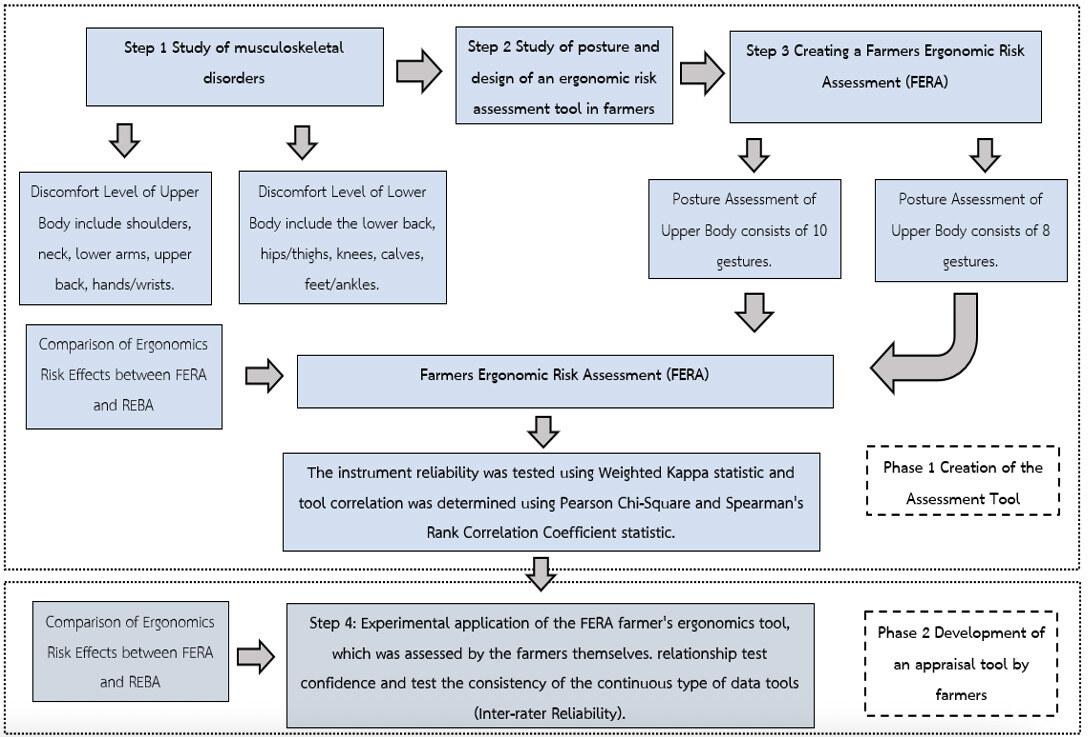
Figure 1: Diagram of the development of the Farmers' Ergonomic Risk Assessment (FERA)
3.2 Creation of the FERA Tool
Step 1: Study of the MSDs in terms of the ergonomics of the farmers’ working postures and subsequent creation of tools. The study of the subject group was performed in regard to rubber-tapping activities. The body discomfort questionnaire was used to determine relationships. The study was divided into two parts, as follows: levels of upper-body discomfort, i.e, discomfort in the shoulders, neck, lower arms, upper back, and hands/wrists, and levels of lower-body discomfort, i.e, discomfort in the lower back, hips/thighs, knees,
calves, and feet/ankles.
Step 2: The study of posture and the design of an ergonomic risk assessment tool for farmers. The study of working behavior in the rubber tapping process, in which all parts of the body are used to perform tasks, and the study of abnormalities in MSDs were considered in the design of an ergonomic risk assessment tool, which could be divided into 10 upper-body and 8 lower-body parts according to the assessment of postures and time of work.
Step 3: Creation of a FERA tool after testing the relationships in the study of MSDs. After the study of posture and the design of an ergonomic risk assessment tool for farmers, the tool was developed to be equivalent to the REBA ergonomics risk assessment by analyzing the data correlation coefficient using Pearson’s chisquared statistic and testing the reliability of the tool using the kappa weighted statistic (weighted kappa). This led to the creation of a whole-body FERA ergonomic risk assessment tool, which was created by combining upper- and lower-body FERA ergonomics risk scores from a 4×4 risk matrix based on Chaiklieng (2019). The 4x4 risk matrix is used to balance detailed risk assessment with practical simplicity. By offering 16
potential risk combinations, it allows for better, more granular risk estimation and risk prioritization.
3.3 Development of FERA Tool
Development was based on the Phase I study and the test of correlation between the FERA risk assessment tool and the REBA observations assessed by the investigators. To develop a FERA through observation of the working postures of farmers so that they can use it as a self-assessment, the scores are colored in the assessment form so that the farmers can understand them and can choose answers according to the following colors and meanings: green means 1 point, yellow means 2 points, orange means 3 points, red means 4 points.
The assessment process by farmers’ self-assessment could be performed by following three steps:
Step 1: Posture Assessment
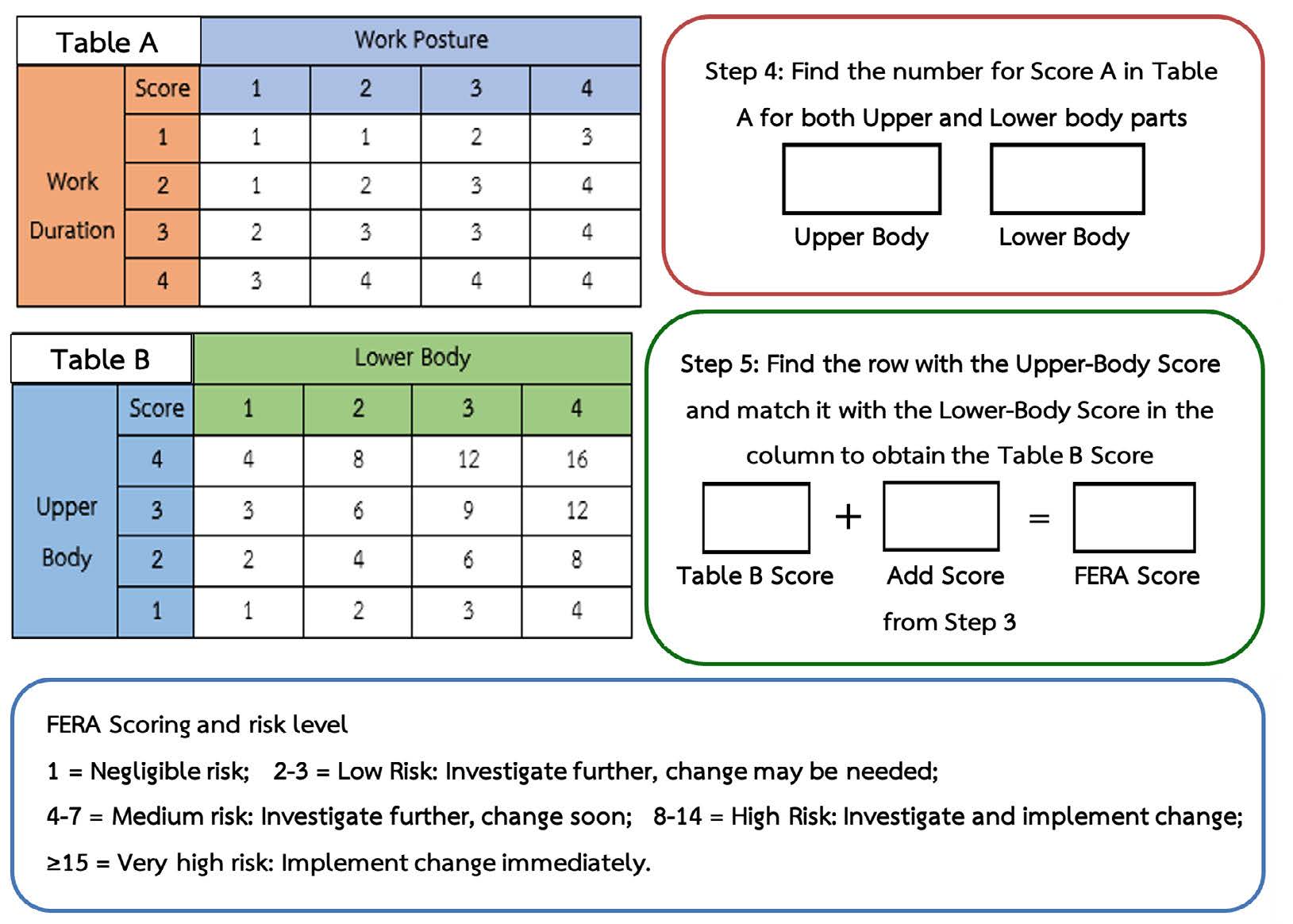
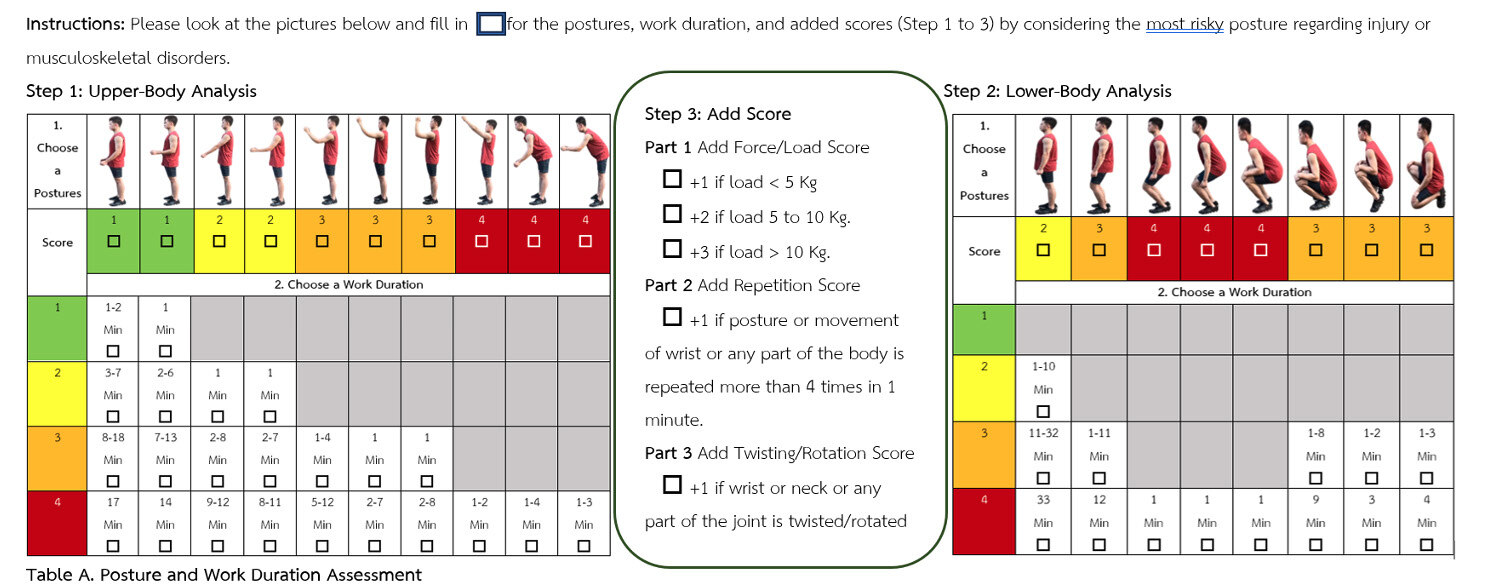
The selection was made according to the performance posture that was found to be most at risk of injury from MSDs. The body assessment was divided into two parts: Part 1: Upper-Body Assessment, which mainly considers the position of the shoulders, arms, and back, as shown in Fig. 2, and Part 2: Lower-Body Assessment, which primarily considers the position of the legs and feet, as shown in Fig. 3. This step has a maximum score of 4 points.
Step 2: Estimating the Duration of Work
In performing the duration of work assessment in Step 2, the body assessment in regard to work duration was divided into two parts: Part 1: Upper-Body Assessment, as shown in Fig. 2, and Part 2: Lower-Body Assessment, as shown in Fig. 3. The posture and work duration assessment was later used in calculations for a combination of upper- and lower-body assessment.
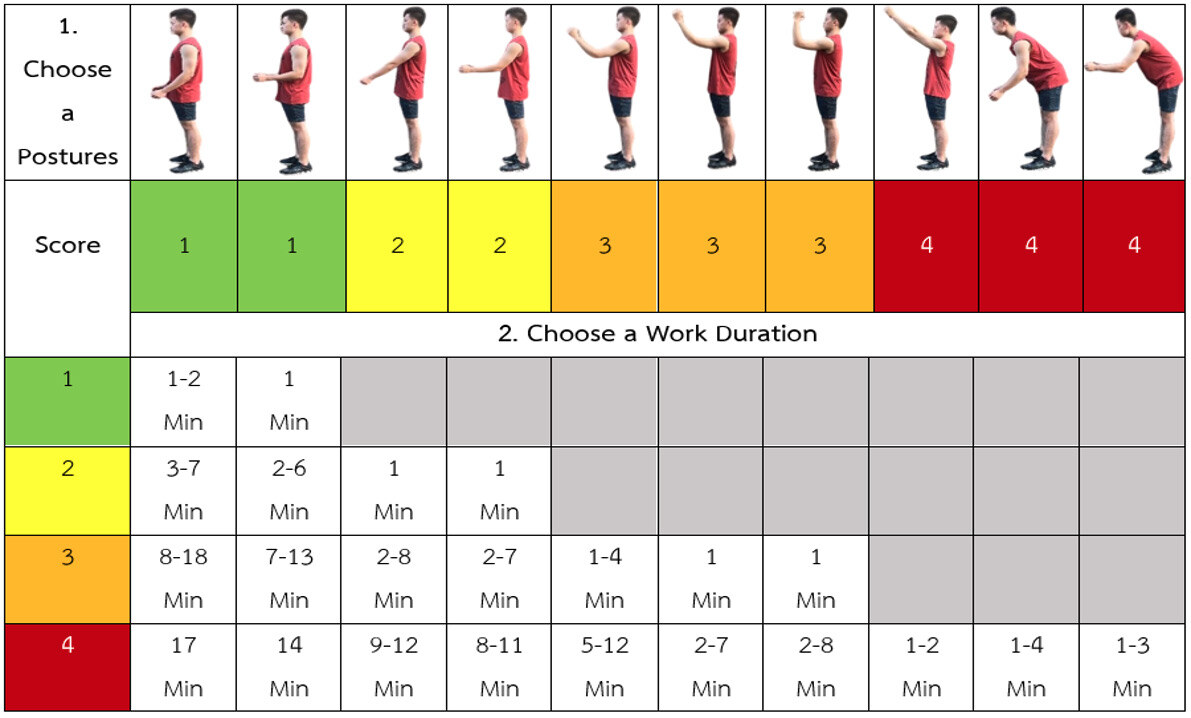
Figure 2: Farmers' Ergonomic Risk Assessment for the upper body
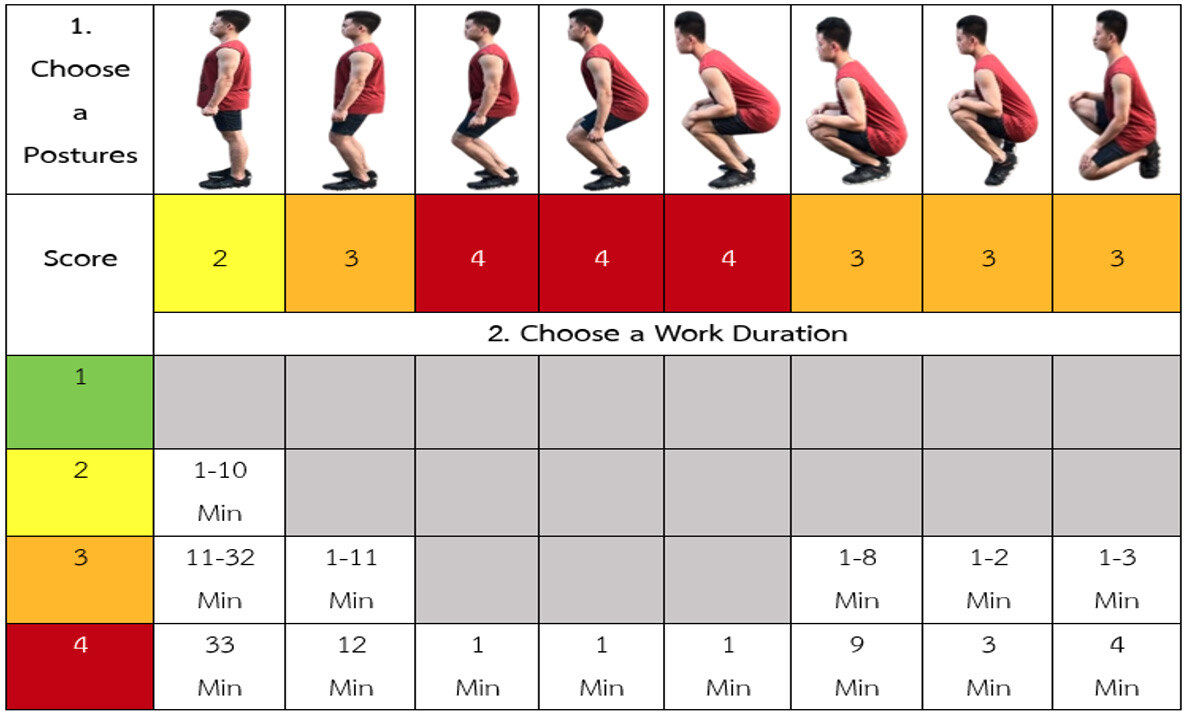
Figure 3: Farmers' Ergonomic Risk Assessment for the lower body
Step 3: Additional Score to Risk Posture and Work Duration According to Force
Effort, Repeated Posture, and Twist Application
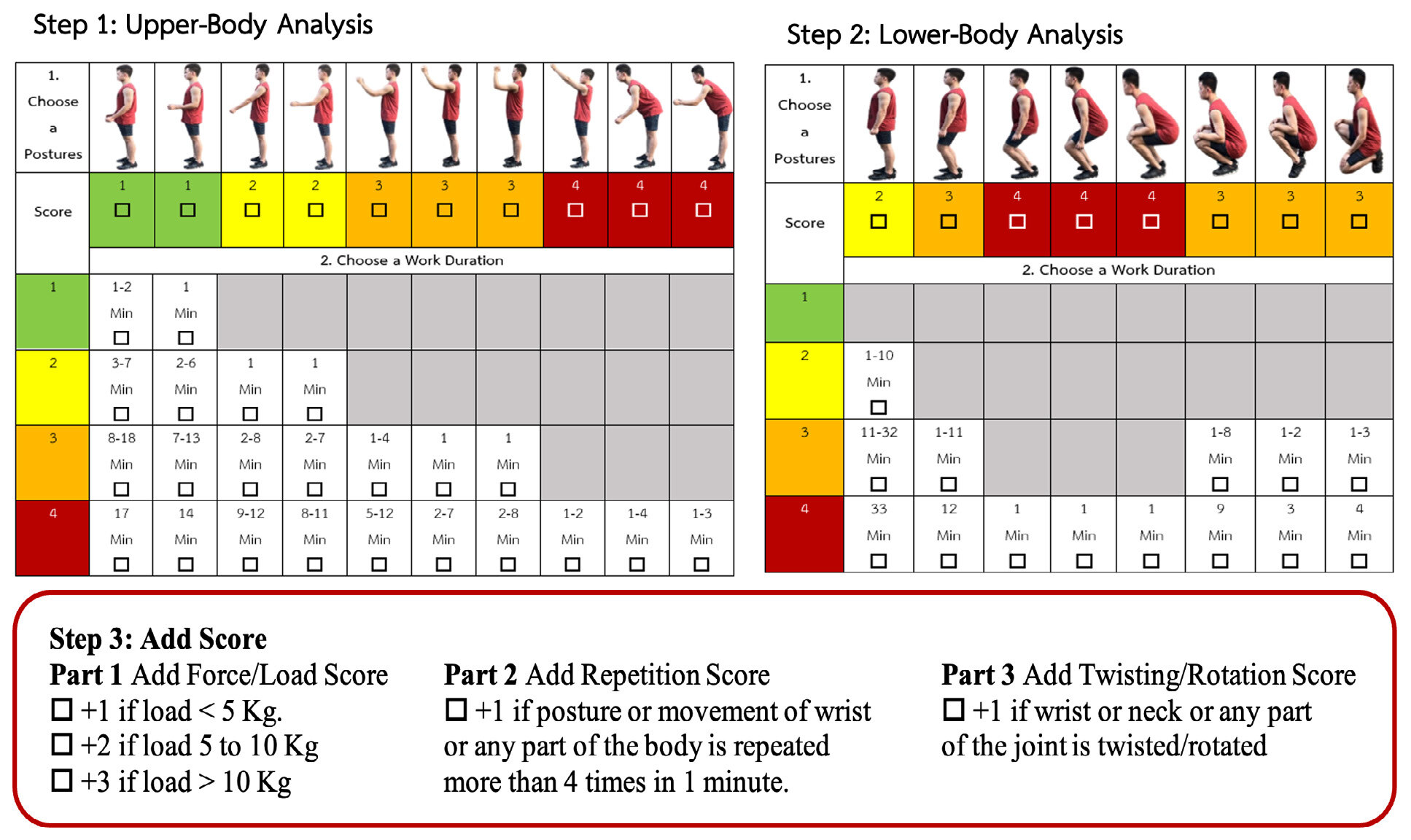
The modification score from adding to the previous steps was divided into three parts: Part 1: Force effort +1 means less than 5 kg of effort, +2 means between 5 and 10 kg of effort, and +3 means more than 10 kg of effort; Part 2: The posture is repeated or the wrist is used repeatedly or any part is used more than 4 times in 1 minute; and Part 3: +1 means twisting/turning of the wrist or neck or any other joint while working. This step has a maximum score of 5, as shown in Fig. 4. In the ergonomics risk assessment process, the farmers were either self-assessed or assessed by the investigator.
.jpeg?width=1506&height=490&name=Fig.%206%20(2).jpeg)
Figure 6: Farmers' Ergonomic Risk Assessment (FERA)
3.4 Data Analysis
The data was analyzed using descriptive statistics with the STATA Version 11.0 program. Numbers and percentages are presented to describe general information and the level of body discomfort. The level of ergonomic risk was analyzed using Spearman’s rank correlation coefficient statistic. The correlation between FERA ergonomics risk and REBA ergonomics risk was tested at a significance level of 0.05, and confidence was tested using the weighted kappa statistic and inter-rater reliability testing. This research has been approved by the Human Research Ethics Committee at Khon Kaen University, No. HE642272.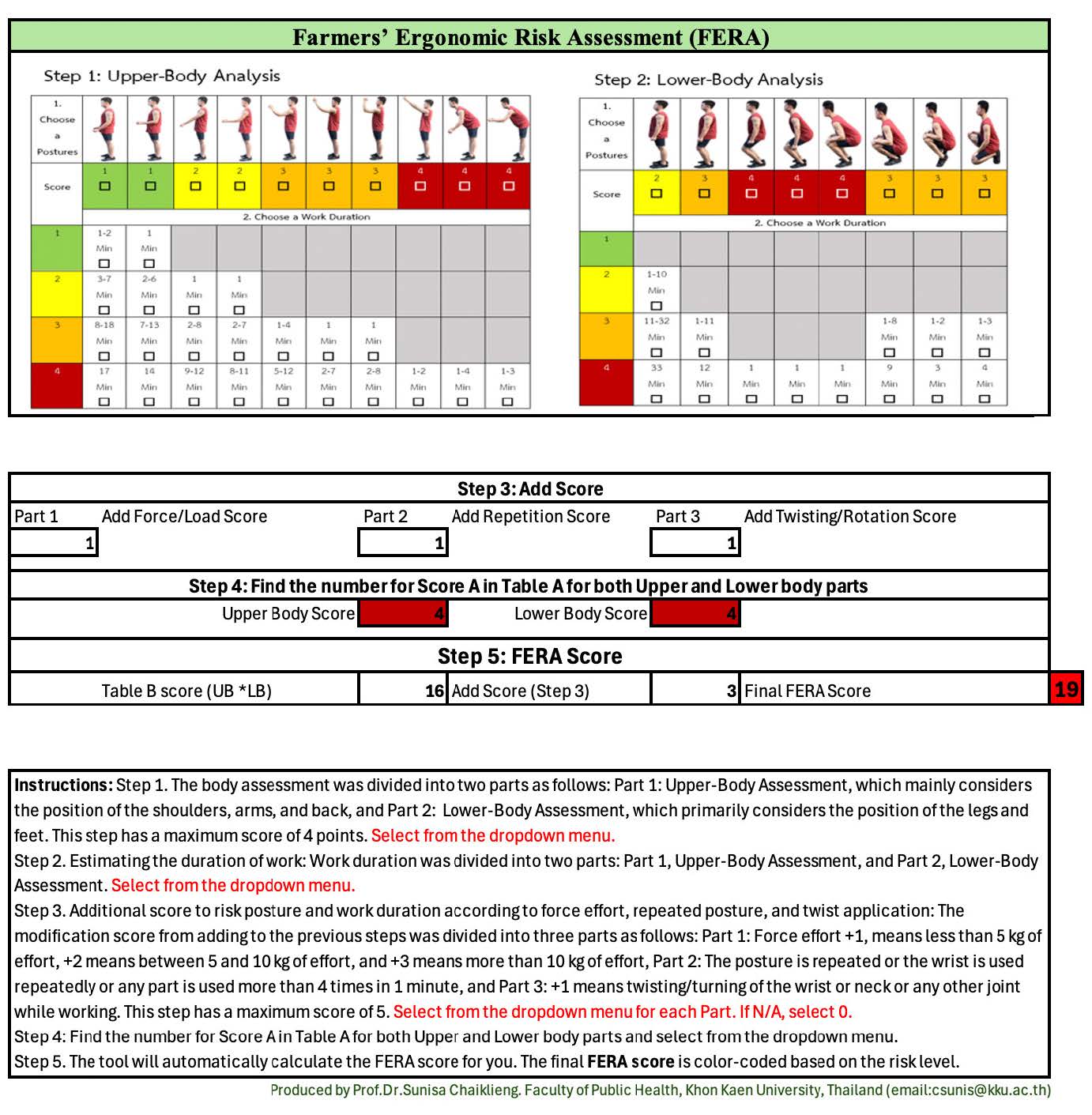
.jpeg?width=1059&height=1278&name=Fig.%207%20(2).jpeg)
4. Results
4.1 Characteristics of Agriculturists
During the study phase of tool creation, the subjects were rubber farmers in the Udon Thani Province. It was found that most farmers were male (58.30%), with a median age of 49 years (minimum age of 22 years, maximum age of 70 years) and a median work experience of 15 years (minimum of 3 years, maximum of 50 years). Most of them had no underlying disease (78.30%), lifted and moved heavy objects (91.70%), and performed rubber tapping activity that led to fatigue (96.70%). During the study phase of FERA tool development, 60 rubber farmers in the Ubon Ratchathani province participated as subjects. It was found that most subjects were male (58.30%), with a median age of 49 years (ranging from 25 to 70 years), and a median
work experience of 20 years (ranging from 4 to 50 years). Most of them had no underlying disease (80.00%), with the largest proportion consisting of those who lifted heavy weights (86.70%).
4.2 Musculoskeletal Disorders Severity and Frequency Questionnaire (MSFQ)
Regarding the severity of MSDs, it was found that the intensity of pain increased depending on the body part. Farmers had the most pain in the upper back area, followed by the shoulder area and the feet and ankles. Regarding the frequency of MSDs, it was found that a higher frequency of pain also depended on the body part. Farmers had the most frequent pain in the areas of the shoulders and upper back, followed by the neck, hands and wrists, lower back, calves and hips, and forearms. When assessing the level of discomfort in the body parts of rubber farmers by multiplying the severity by the frequency, it was found that farmers had felt unwell to a greater extent. Discomfort was found most commonly in the shoulders, upper back, and hands
and wrists, followed by the forearms and neck (Table 1).
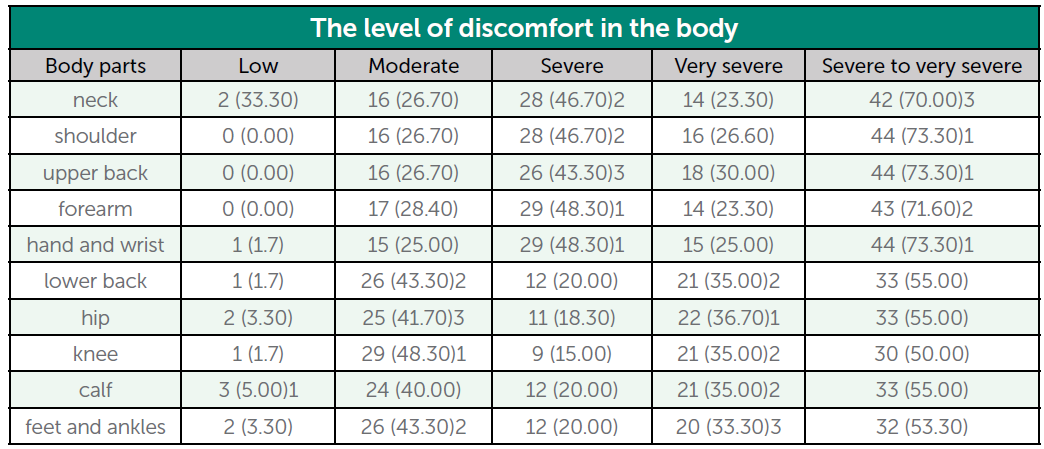
Table 1: Number and percentage of rubber plantation farmers classified by the degree of discomfort (n=60). Note: 1, 2, and 3 refer to the body part with the highest proportion, ranked first, second, and third, respectively.
4.3 Ergonomics Risks
The results of the FERA ergonomics risk assessment found that 43.30% of the sample group had the highest level of FERA ergonomics risk, followed by 33.30% who had a high risk, and 23.40% who had a reasonable risk. The results of the REBA ergonomics risk assessment found that 43.30% had the highest level of REBA ergonomic risk, followed by 35.00% who had a high risk, and 21.70% who had a medium risk.
4.4 Relationship Between FERA Ergonomics Risk and REBA Ergonomics Risk
When considering the relationship between FERA ergonomics risk and musculoskeletal discomfort, using Spearman’s rank correlation coefficient at a significance level of 0.05, it was found that FERA ergonomics risk was statistically associated with REBA (Rho=0.863, p-value< 0.001) (Fig. 8). The intra-rater reliability of the assessors was 0.995, and the reliability of the farmers was 0.977, while the inter-rater reliability between the assessors and the self-assessment of the farmers was 0.971.
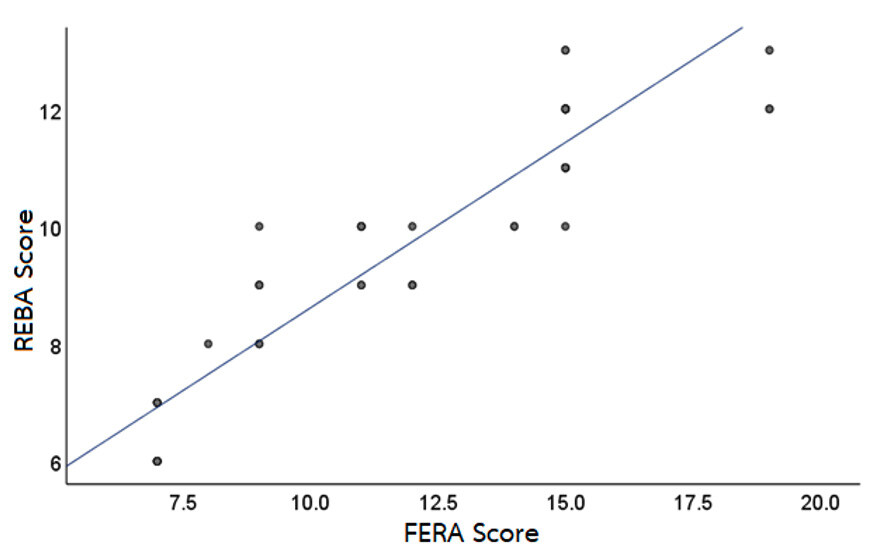
Figure 8: Linear correlation between the REBA ergonomics risk score and the FERA whole body ergonomics risk score (Rho=0.863, p-value< 0.001).
5. Discussion
According to the body discomfort reported by rubber farmers, discomfort was most commonly found in the shoulders, upper back, and hands and wrists of the farmers. During work, the arm is in an exerted posture due to rubber tapping being performed at a high level with repetitive wrist or neck movements, resulting in pain in those areas. This finding is consistent with a study on musculoskeletal discomfort classification by body part, which revealed a high level of susceptibility, with the highest level of discomfort observed in the hand and wrist area (Chaiklieng, 2021). In a previous study of rubber farmers in the Ubon Ratchathani Province, it was found that most farmers experienced moderate discomfort in the hand and wrist areas, followed by the knees and upper back (Khanaphan et al., 2019). This could be supported by the results of a study on MSD prevalence, which showed a high incidence rate of MSDs compared to other occupational diseases during the previous 3 years (Chaiklieng et al., 2022).
The FERA tool is primarily used to assess the tapping motion, as rubber tapping is an activity that utilizes all parts of the body and is expected to result in MSDs. The REBA risk assessment indicated that the posture should be improved immediately. The result is consistent with the previous report on the ergonomic risk of rubber farmers in the Ubon Ratchathani Province, which used REBA in the rubber tapping process (Khanaphan et al., 2019).
The risk outcome from the REBA tool had a statistically significant association with that of the FERA tool, indicating a warning of MSDs in that area. Due to the nature of the work, which leads to exertion in the arm with repeated short twitching, as well as a working posture that includes bending down and tiptoeing, such a posture may affect the MSDs among such farmers. It might explain why rubber tapping farmers had the highest levels of discomfort in the lower back, calves, knees, and feet (Chaiklieng, 2021). Moreover, similar discomfort was also found in various areas of Thai agriculturists and various cultivation activities in upper northeastern Thailand (Poochada et al., 2022).
The FERA tool is derived from the upper- and lower-body posture assessment by using the risk matrix combination that was found to have a significant relationship with the REBA level. The FERA risk assessment, as well as the REBA risk assessment, resulted in a very high level of risk; therefore, it can be confirmed that farmers had a very high-risk posture. This development tool for assessing ergonomic risk of working postures in farmers is an easy-to-use assessment and can be used as a specific tool for assessing farmers’ motion during work performance. It is the proposed choice to assess health risk in the MSDs surveillance program as the previous occupational health risk assessment on MSDs was applied to various occupations to predict the
MSD risk both in farmers (Chaiklieng, 2021), and industrial workers (Chaiklieng, 2019). The tool was developed for simplicity and to help address the farmers’ ergonomic risk assessment needs.
The FERA tool is recommended as the specific tool for the farmers’ ergonomic risk approach in the occupational risk matrix, rather than using REBA, which is not specifically tailored to farmers’ risk assessment. There should be further investigation and application for development so that the self-assessment technique can be effectively utilized in the proposed tool among farmers engaged in various types of agricultural activities.
Although the tool was developed to assess farmers’ ergonomics risks, it can be used in other industries. The research team is planning follow-up studies.
Supporting Materials
S1. Farmers’ Ergonomic Risk Assessment (FERA tool).xlsx
References
Chaiklieng, S., Health Risk Assessment on Musculoskeletal Disorders Among Potato-Chip Processing Workers, PLoS ONE, vol. 14(12), p. e0224980, 2019. DOI: 10.1371/journal.pone.0224980
Chaiklieng, S., Khanaphan, K., and Suggaravetsiri, P., Factors Correlated with Risk Levels of Musculoskeletal Disorders Among Rubber Planters, J. Medical Tech. and Physical Therapy, vol.
32(1), pp. 82-94, 2020.
Chaiklieng, S., Occupational Health Risk Assessment of Musculoskeletal Disorders on Exposure to Working Ergonomic Factors in Para Rubber Plant Farmers, KKU J Public Health Research, vol. 14(2), pp. 32-44, 2021.
Chaiklieng, S., Suggaravetsiri, P., Poochada, W., Thinkhamrop, W., and Dacherngkhao, T., The Burden of Work-Related Diseases and Injuries Among Agriculturists: A Three-Year Retrospective Study In Thailand, Safety, vol. 8, p. 78, 2022. DOI: 10.3390/safety8040078
Donjuntai, J. and Chaiklieng, S., Assessment of Health Risks to Pain the Shoulders of the Employees in the Potato Chips Production Process, J. Medical Technology and Physical Therapy, vol.
29(2), pp. 138-150, 2017.
Hignett, S. and McAtemney, L., Rapid Entire Body Assessment (REBA), Appl. Ergon., vol. 31(2), pp. 201-05, 2000.
Homsombat, T. and Chaiklieng, S., Physical Fitness and Muscular Discomfort Among Informal Garment Female Workers in Udon Thani Province, Thailand, J. Med. Assoc. Thailand, vol. 100(2), pp. 230-8, 2017.
Jirawatkul, A., Biostatistics for Health Science Research, Khon Kaen: Khon Kaen University, 2008.
Khanaphan, K., Suggaravetsiri, P., and Chaiklieng, S., Ergonomics Risk and Muscle Fitness Among Rubber Planters in Ubon Ratchatani Province, UBRU J. Public Health Research, vol. 8(2), pp.
21-31, 2019.
Kong, Y.K., Han, J.G., and Kim, D.M., Development of an Ergonomic Checklist for the Investigation of Work-Related Lower Limb Disorders in Farming - ALLA: Agricultural Lower-Limb
Assessment, J. Ergonomics Society of Korea, vol. 29(6), pp. 933–942, 2010. DOI: https://doi.org/10 .5143/jesk.2010.29.6.933
Kong, Y.K., Lee, S.J., Lee, K.S., Han, J.G., and Kim, D.M., Development of an Ergonomics Checklist for the Investigation of Work-Related Upper Limb Disorders in Farming - AULA:
Agricultural Upper-Limb Assessment, J. Ergon. Soc. of Korea, vol. 30(4), pp. 481–489, 2021. DOI:10.5143/jesk.2011.30.4.481
Mattharak, W., Tuktien, P., and Naemsai, O., Assessing the Risks of Working in the Collection of Latex from the Plantations of Rubber Farmers, Academic Conf. of Khon Kaen Uni., pp. 88-93, 2011.
Poochada, W., Chaiklieng, S., and Andajani, S., Musculoskeletal Disorders Among Agricultural Workers of Various Cultivation Activities in Upper Northeastern Thailand, Safety, vol. 8, p. 61,
2022. DOI:10.3390/safety8030061